 More often than not, an artist’s creation are reflections of his thoughts, emotions, and experiences. They are likewise an indicator of the creator’s level of expertise. This same philosophy holds true in golf course design. One perfect example is Tom Watson’s Conservatory at Hammock Beach in Jacksonville, Florida. The golf vacation destination holds the stories of Tom Watson’s prestigious life as a golfer, and the genius that he is in golf course design.
The 5-time British Open Champion, and the multi-awarded, well-celebrated golf legend that is Tom Watson has not only brought excellence into the Hammock Beach Resort with the Conservatory at Hammock Beach. He brought his own brand of excellence and it tells the champion that he is, with so much attention to every detail of the course. The inland layout is laden with 76 acres of lakes, waterfalls, brooks, and field stonework that make for a stunning golf trip experience. And stunning it is, both in scenery, and challenge that is best for golfers of ANY level. Watson also added 140 bunkers of white sand and coquina shell to the course, just the right mix of challenge and signature Florida golfing. If that isn’t enough yet, there are 3 sod-faced bunkers in the course too; Watson’s way of paying homage to British links style golfing that he has almost mastered.
The 18-hole Conservatory at Hammock Beach stretches to 7,776 yards from the longest tees and plays for a par of 72. And just as the golfing world has raved about Tom Watson’s skills in playing the sport, it has given the golf vacation haven a similar acceptance with its many accolades since opening in 2006, including 3rd in Golf Digest’s list of America’s Best New Public Courses (January 2008 issue).
 Two is better than one. Cliché. Two working as one. Romance. Two opposites working as one. Extraordinary. And this is exactly what the
  representing the Hall of Famers, and who else could better carry out a course worthy of a world Hall of Fame but Nicklaus and Palmer no less. It measures more than 7,200 yards from the back tees, playing for a par of 72, featuring bunkers, water hazards, and hole placement that are neither Palmer nor Nicklaus, but both. The natural beauty of the area perfectly compliment the handiwork of the geniuses; the front nine is laden with loblolly pines and open meadows while the back nine is backdropped by a good helping of 200-year old oaks. These features of the
  Although that being said, let it not be known that the
  vacations in the Sunshine State are made of a thousand palm trees, the best sunshine, and the most abundant outgrowth of tropical vegetation. These are also some of the qualities that make Florida
 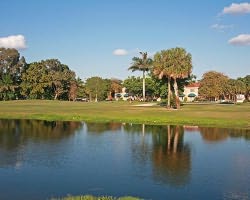 Seated in a lush, 500-acre tropical haven in Pembroke Pines, the
  an exquisite Von Hagge/Devlin design that has been among the best courses of South Florida. To keep it up to date, the management hired the services of the renowned designer, Joe Lee, in 2001 for remodeling. Joe Lee, being a true artist and a genius at that, managed to maintain the course’s classic beauty whilst adding his own touch to it, thereby escalating the already high standards of the course. Lee added more than a hundred bunkers, new water features, and improved the tee boxes to the course laden with a variety of mature trees. The result is a
 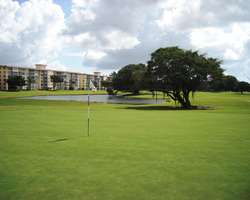 Course
 rounds for players who seek great challenge and easy rounds for beginners. The sidelong water hazards that surround the broad fairways will test the course management skills of the players. Golfers should have precise placement and distant control to be successful on every hole. On the other hand, novice golfers who desire a friendly length can choose other sets of tees that range from 5,431 to 6,586 yards. Spending a
  with its sister course, the Mighty Oaks. The two superb championship courses are part of the four-course facility in Palm Aire Country Club in Pompano Beach, Fl.
  It takes a lot of guts for a developer to decide putting a classic course on a full-blown renovation. And it builds too much pressure on the hands of the architect who will handle the job. It requires heart than talent to put his own mark in someone else’s masterpiece. Bobby Weed carried this exact burden when he was given the task of giving Mark Mahannah’s original design in
 design team of von Hagge, Smelek & Baril. Whilst everyone was anticipating a course the same caliber as the old one, the
