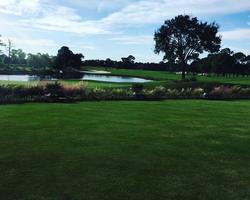
The old-school avid golfer knows how big a fan of risk-reward games Arnold Palmer is. This much is true on almost every Palmer course. The PGA National – Palmer Course on the PGA National Resort and Spa in Palm Beach is a little more forgiving than the usual Palmer creation. With its open fairways and Bermuda greens that are large and rather accommodating, there is also much room for golfers on this golf vacation destination without being so intimidated for their lower skill levels.
PGA National – Palmer Course is known for not being too penalizing.  Golfers can make an errant shot or two but not suffer for it for too long. The undulating fairways of this golf vacation haven allow second chance shots for golfers, and the best rewards for creative and daring shots. Truly, a risk-reward layout. Another notable feature of this course is the escalating excitement and beauty in the holes as the game goes further. Its 17th hole is listed the most challenging, but with a quick follow of the most scenic 18th hole. Palmer gave such and interesting finish to this course.
Amongst the largest of the five courses on the Resort, the PGA National – Palmer Course measures 7,079 yards from the longest tees and plays for a par of 72. Palmer made good use of every hazard on the course – having a total of 48 bunkers, and water playing on 16 holes, to make any golf trip set here not so much a risk but a most rewarding experience.
 named after Rodman Wanamaker. For the uninitiated, Wanamaker is a total stranger. But to the golf historian, aficionado, and the true lover of the sport, Rodman Wanamaker’s name is synonymous to the PGA of America, as he inspired its birth in 1916. He is THAT much of a personality in the sport. The fact that the
  Along with the Ryder and Dye courses, the
  Pete Dye’s taste in golf course architecture borders on the eccentric, sometimes being the subject of conservatives’ ire and criticism. The
  characterized by heavily-guarded greens, tight galleries with a good helping of pines and palms, and a lot of water in the holes. And by a LOT, it actually means water play on all but three of the 27 holes. And that comes with wind consistently blowing – a treacherous kiss to challenge any good golfer’s game and resolve. Everything that the golfing world enjoyed several decades ago in their
  Country Club
 fairways offer a widely open layout that can be more forgiving than other courses. Half of the holes are surrounded by numerous water hazards: ponds, creeks, canals, and lakes. The toughest trouble can be experienced around the greens and fairways that are encircled by white sand traps. If players overcome these hazards, they find themselves making an approach shot on the large undulated greens. But of course,
  when it is accomplished harmoniously, this only means one thing – it is a must-see. And one
 Course
 recognizable than the
  GolfTrip.com - Golf Tips, Vacations, Packages, Destinations and more!